 Contact
Florida Museum of Natural History
Special Collections Building
3207 Hull Road
University of Florida
Gainesville, FL 32611
352-273-1829
slapcin@flmnh.ufl.edu
Collection
Education
M.S., University of Virginia
B.S., George Mason University
Research Interests
I am interested in documenting diversity of terrestrial snails through taxonomic surveys of under-sampled geographic areas and microhabitats. Multi-year efforts to sample the terrestrial snails of the islands of New Guinea and Madagascar have uncovered many undescribed species, suggesting both islands are much more diverse than previously known. Surveys of southeastern North America focusing on small species restricted to specialized habitats including seeps and springs are also uncovering previously unreported species. Surveys also uncover exotic species that have not previously been noticed. Early detection of these exotic and potentially invasive snails facilitates efforts at interdiction and eradication before they become well established and have an opportunity to impact natural habitats and agriculture.
Publications
Research News
The immense journey: The life of Harry Lee, in the words of those who knew him
In his book, “The Immense Journey,” anthropologist Loren Eiseley wrote, “If there is magic in this world, it is contained…
Nine new snail species discovered in Papua New Guinea, a biodiversity hot spot at risk
Nine new species of carnivorous land snails have been found in the remote forests of Papua New Guinea, a biodiversity…
The Florida Museum of Natural History opens state-of-the-art collections building
The Florida Museum of Natural History is expanding this month with the opening of a state-of-the-art special collections building on…
See all news articles featuring John Slapcinsky
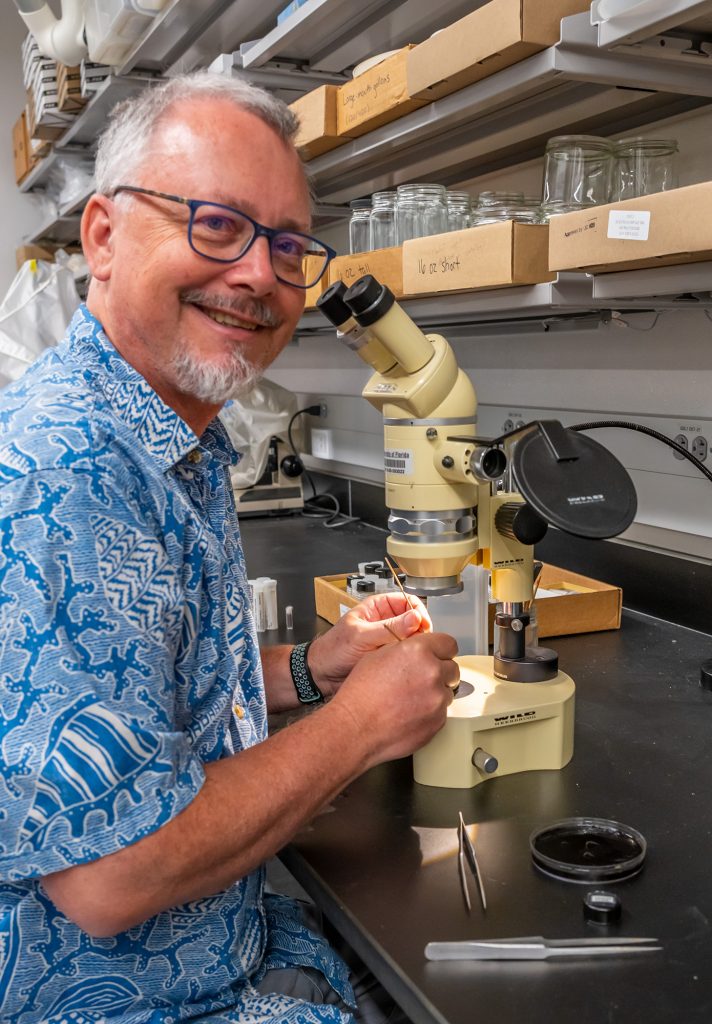
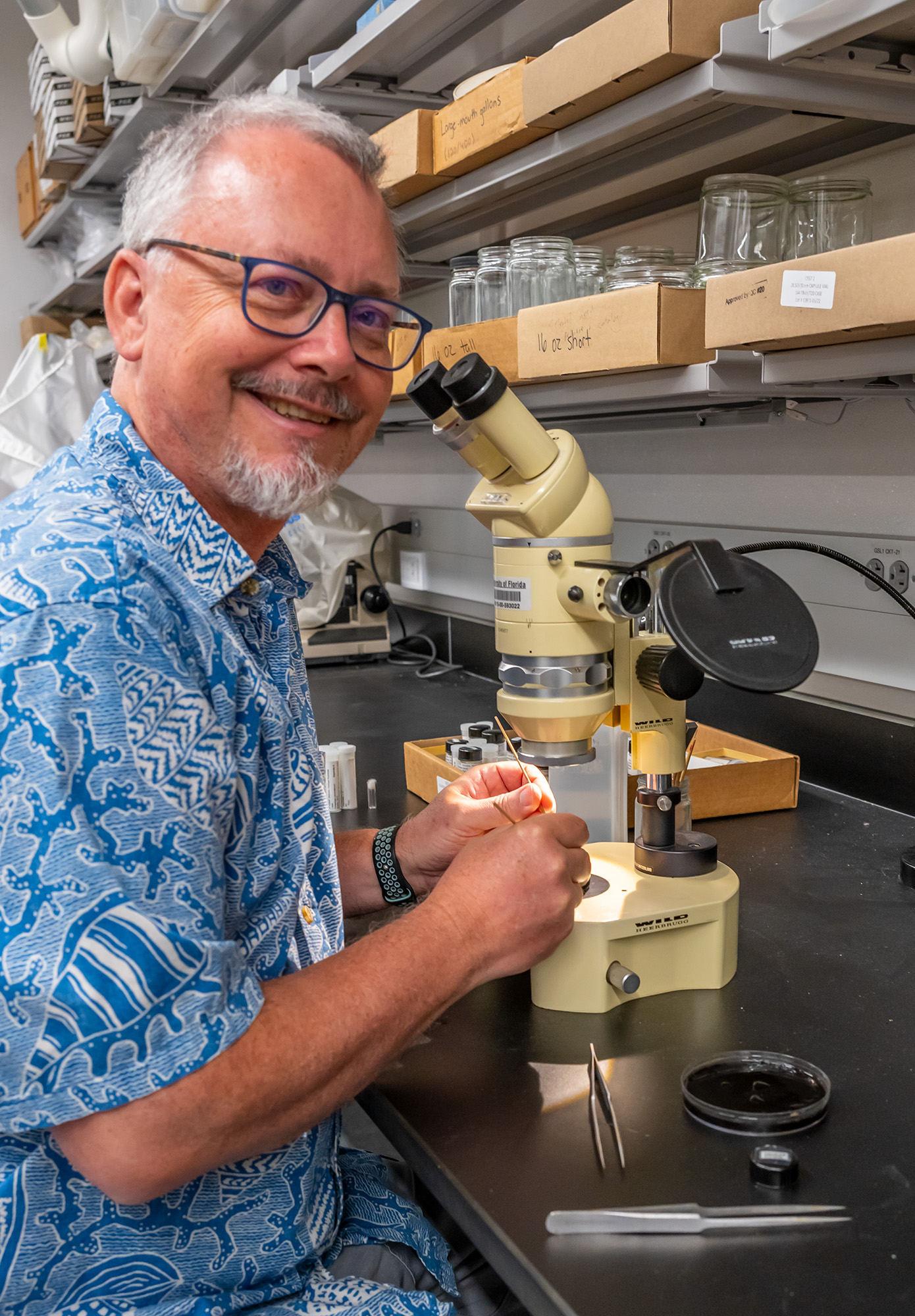
Photo by Jeff Gage/Florida Museum. Please contact our research news desk for media inquiries.